Rats & Food Safety: The Compliance Risk for Dublin Businesses
For a food business in Ireland, rats are a legal compliance risk, not just a nuisance. FSAI food-safety law and your HACCP system require you to keep the premises free of pests and to document your pest control. A rat problem can trigger a failed inspection, an Improvement Notice, or a Closure Order - so documented, professional rat control is essential.
If you run a cafe, restaurant, takeaway, shop, bakery or any food business in Dublin, rats are far more than an unpleasant surprise - they are a direct threat to your licence to trade. This guide explains the food-safety and compliance dimension of rat control in Ireland: what the law requires, what an inspector looks for, what the consequences of failure are, and how a properly documented pest control programme protects your business. It is written by Central Pest Control, which has provided FSAI/HACCP-compliant pest management to Dublin food businesses for over 35 years.
Why Rats Are a Food-Safety Emergency
Rats are not merely dirty - they are a documented vector for serious contamination. In a food environment, a rat problem means:
- 1Disease contamination - rats carry pathogens including Salmonella, Leptospira (Weil's disease) and E. coli, transmitted through urine, droppings and contact with food-contact surfaces
- 2Physical contamination - droppings, hair, urine and gnaw damage contaminate stock, packaging and preparation areas
- 3Structural damage - rats gnaw wiring (a fire risk), pipework (a flood risk) and packaging, causing costly damage and stock loss
- 4Reputational damage - a single customer sighting, photo or review can do lasting harm to a food business in a way no other pest can
What the Law Requires: FSAI and HACCP
Food businesses in Ireland operate under EU and national food-safety legislation enforced by the Food Safety Authority of Ireland (FSAI) and the HSE's Environmental Health Service. Two things are central to pest control compliance:
FSAI / Food Hygiene Regulations
Under food hygiene law (Regulation (EC) No 852/2004 and related Irish regulations), food business operators must keep premises clean and in good repair, and must have 'adequate procedures in place to control pests'. In plain terms: your premises must be kept free of pests, and you must be able to show what you are doing to achieve that. Pest control is not optional and it is not something you can leave until you see a rat.
HACCP
Every food business must operate a HACCP (Hazard Analysis and Critical Control Points) food-safety management system. Pest control is a prerequisite programme within HACCP: you are required to identify the pest hazard, put controls in place (professional pest management, proofing, monitoring), and - crucially - keep records demonstrating that the controls are working. When an environmental health officer inspects, your pest control documentation is one of the first things they will ask to see.
- 1A pest control contract with a professional, licensed provider
- 2A current site plan showing bait station / monitor locations
- 3Dated inspection reports and a pest-activity log
- 4Evidence that any activity found was acted on and closed out
- 5Proofing and hygiene measures to prevent, not just treat, pests
The Consequences of Getting It Wrong
The FSAI and Environmental Health Service have real enforcement powers, and rodent activity in a food premises is one of the most common triggers for action:
| Enforcement Action | What It Means |
|---|---|
| Improvement Notice | A legal notice requiring you to fix specified problems (e.g. evidence of rodents, poor proofing) within a set timeframe. |
| Closure Order | The business or part of it is ordered to close where there is a grave and immediate danger to public health, such as an active rodent infestation. Closure Orders are published on the FSAI website. |
| Prohibition Order | Prohibits the use of specified equipment, processes or premises. |
| Prosecution | In serious cases, food business operators can be prosecuted, with fines and reputational fallout. |
| Publication | Closure and Prohibition Orders are published monthly by the FSAI and widely reported - the reputational cost often exceeds the legal one. |
A Closure Order for rodent activity is a genuine business emergency: lost trade, public naming, and a scramble to remediate and re-open. Preventing it with a documented, professional programme is vastly cheaper than dealing with the aftermath.
What Compliant Rat Control Looks Like
A compliant commercial rat control programme is proactive and documented, not reactive. Central Pest Control provides Dublin food businesses with:
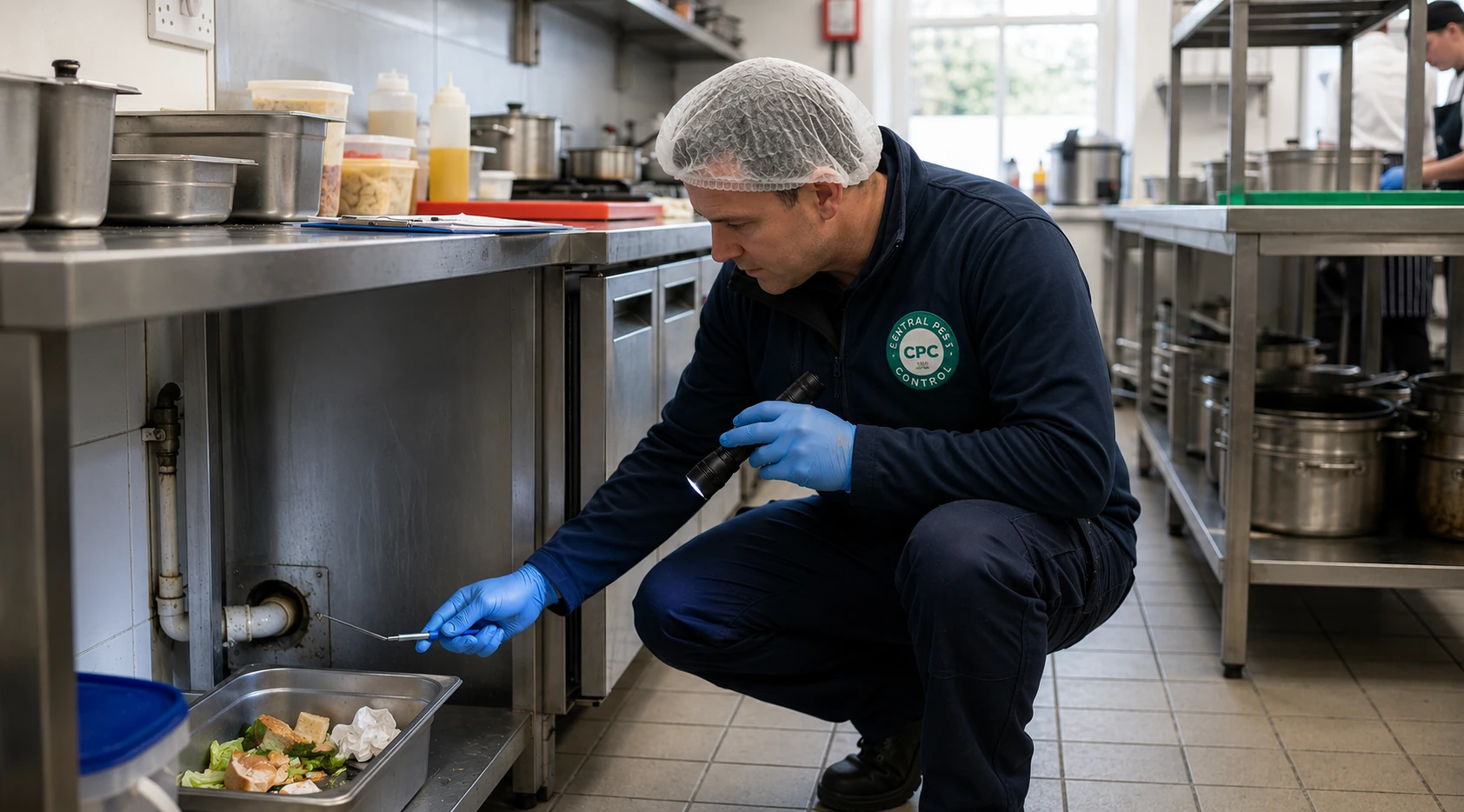
- 1A site survey and risk assessment identifying vulnerable points and existing activity
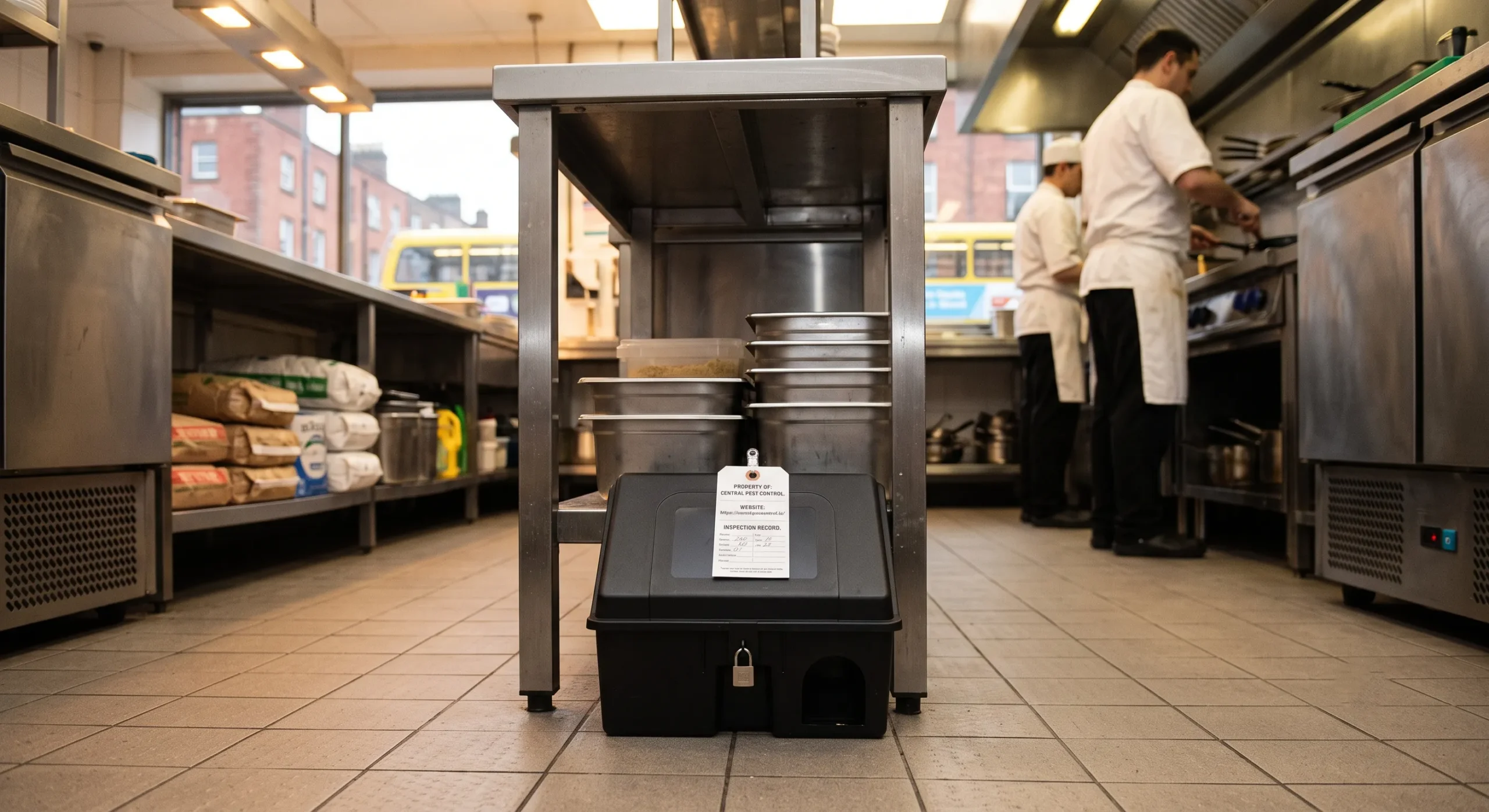
- 2A mapped network of tamper-resistant bait stations and monitoring points on a documented site plan
- 3Scheduled routine visits by a PMU-licensed technician, with the frequency set by the site's risk level
- 4Written reports and a pest-activity log for every visit the records your HACCP system and the FSAI require
- 5Rapid response to any sighting or activity, with corrective actions recorded and closed out
- 6Proofing and hygiene recommendations to prevent recurrence, not just treat the symptom
Why Experience and Documentation Matter
Any operator can put down bait. What protects a food business is the professionalism and the paperwork: a licensed technician who applies rodenticides safely and legally, and a documented audit trail that stands up to inspection. This is where a cheap, one-off treatment leaves a business dangerously exposed - no contract, no site plan, no logs, nothing to show an inspector. Central Pest Control's 35+ years of FSAI/HACCP-compliant work with Dublin food businesses is exactly the depth of experience this responsibility demands.
Frequently Asked Questions
-
Is pest control a legal requirement for food businesses in Ireland?
Yes. Under EU and Irish food hygiene law enforced by the FSAI, food businesses must keep premises free of pests and have adequate procedures to control them. Pest control is a prerequisite programme within your HACCP system, and you must keep records demonstrating it is in place and working. -
What happens if an inspector finds rats in my premises?
Evidence of rodent activity can lead to an Improvement Notice, and where there is a grave and immediate danger to public health, a Closure Order which may close all or part of the business until the problem is remedied. Closure Orders are published by the FSAI, so there is a reputational cost as well as a commercial one. -
What pest control records do I need for HACCP?
You need evidence of a pest control programme: a contract with a professional provider, a current site plan showing bait station and monitor locations, dated inspection reports, a pest-activity log, and records showing that any activity found was acted on and resolved. Your pest control provider should supply all of this documentation. -
How often should a food business have pest control visits?
Visit frequency depends on the risk level of the premises, but food businesses typically have scheduled routine visits (often monthly, sometimes more frequent for higher-risk sites), plus rapid response to any activity between visits. Your provider should set the schedule based on a site risk assessment.
Need Commercial Rat Control in Dublin?
Central Pest Control provides FSAI/HACCP-compliant rat control for Dublin cafés, restaurants, takeaways, shops, bakeries and food businesses. Get documented monitoring, inspection reports, activity logs and rapid response from PMU-licensed technicians.