Wasp or Bees' Nest? How to Tell (and Why It Matters)
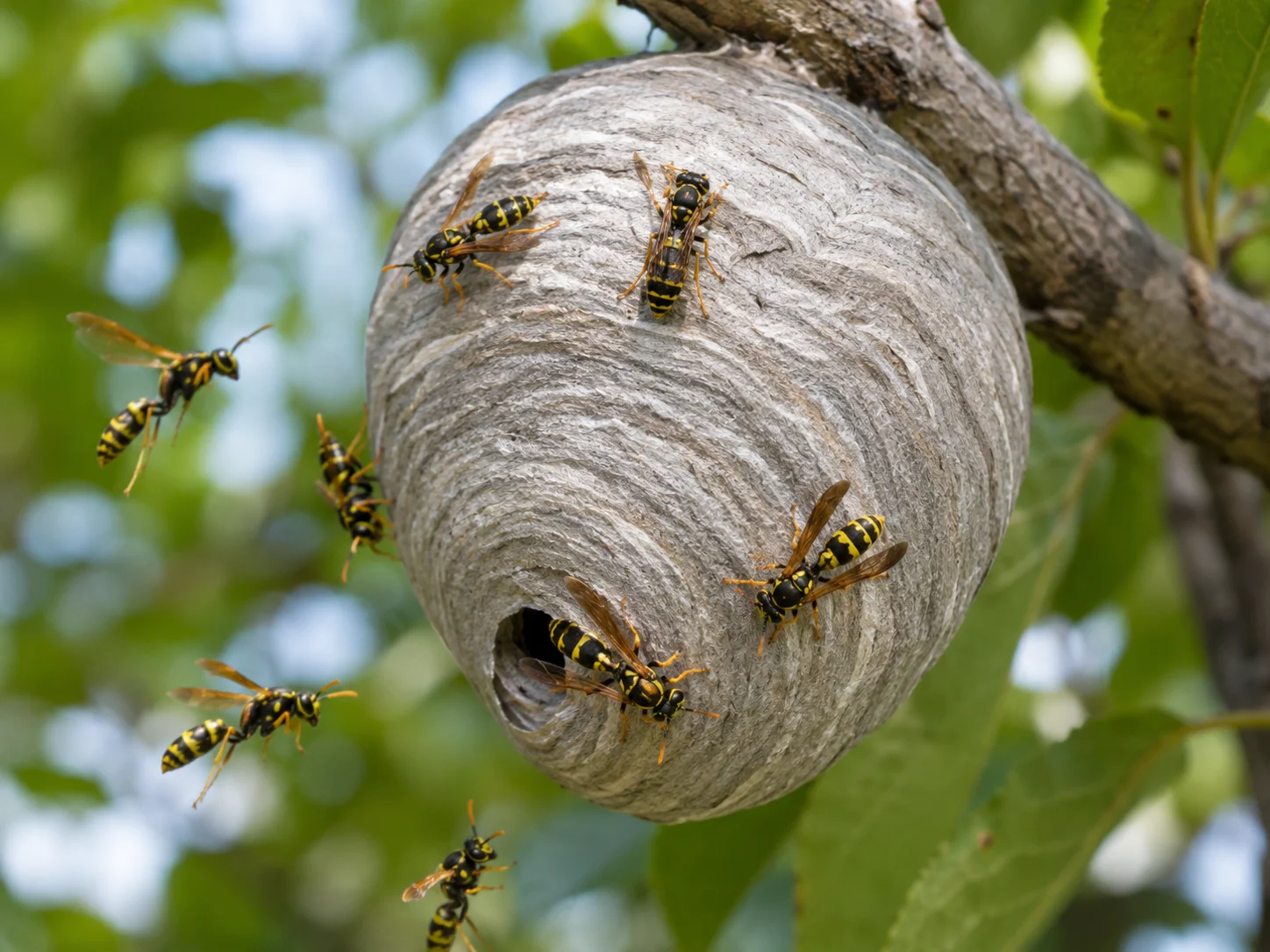
Wasps have a bright yellow-and-black body with a narrow 'waist' and a smooth, papery grey nest. Bees are hairier, rounder and duller, and nest in cavities or (bumblebees) in the ground. It matters because bees are protected and vital pollinators in Ireland we relocate bees rather than destroy them, and only treat wasps.
Every summer we get calls from Dublin homeowners worried about a striped insect nest that turns out to be bees – or, occasionally, the reverse.. Telling them apart matters more than most people realise. Wasps can be treated; bees, as protected pollinators, should be left alone or relocated by a beekeeper wherever possible. This guide, from a pest control firm with 35 years of experience identifying both, shows you how to tell the difference confidently and why it is the responsible thing to do.
Telling Wasps and Bees Apart the Insect
| Feature | Wasp | Bee |
|---|---|---|
| Body | Bright, glossy yellow and black. Smooth and hairless. Distinct narrow 'waist'. | Rounder, hairier, duller. Honey bees golden-brown; bumblebees fat and fuzzy. |
| Waist | Very narrow, defined 'wasp waist' between thorax and abdomen. | Thicker, less defined waist. |
| Legs (in flight) | Legs tucked up, hard to see. | Legs often dangle; bumblebees carry visible pollen sacs. |
| Behaviour | Aggressive when disturbed; attracted to food and sweet drinks late summer. | Generally docile; focused on flowers, not your picnic. |
| Sting | Can sting repeatedly. | Honey bees sting once and die; bumblebees can sting more than once but rarely do. |
Telling Them Apart the Nest
Identifying a Wasp Colony
A wasp colony builds its nest from chewed wood pulp a papery, greyish material with a distinctive swirled pattern. Early in the season it can be golf-ball sized; by late summer it may be as large as a football or bigger. Wasp nests are commonly found in roof spaces, under eaves, in wall cavities, sheds and dense hedges. You will see a steady two-way stream of wasps at a single entry point.
Honey Bee Nest / Colony
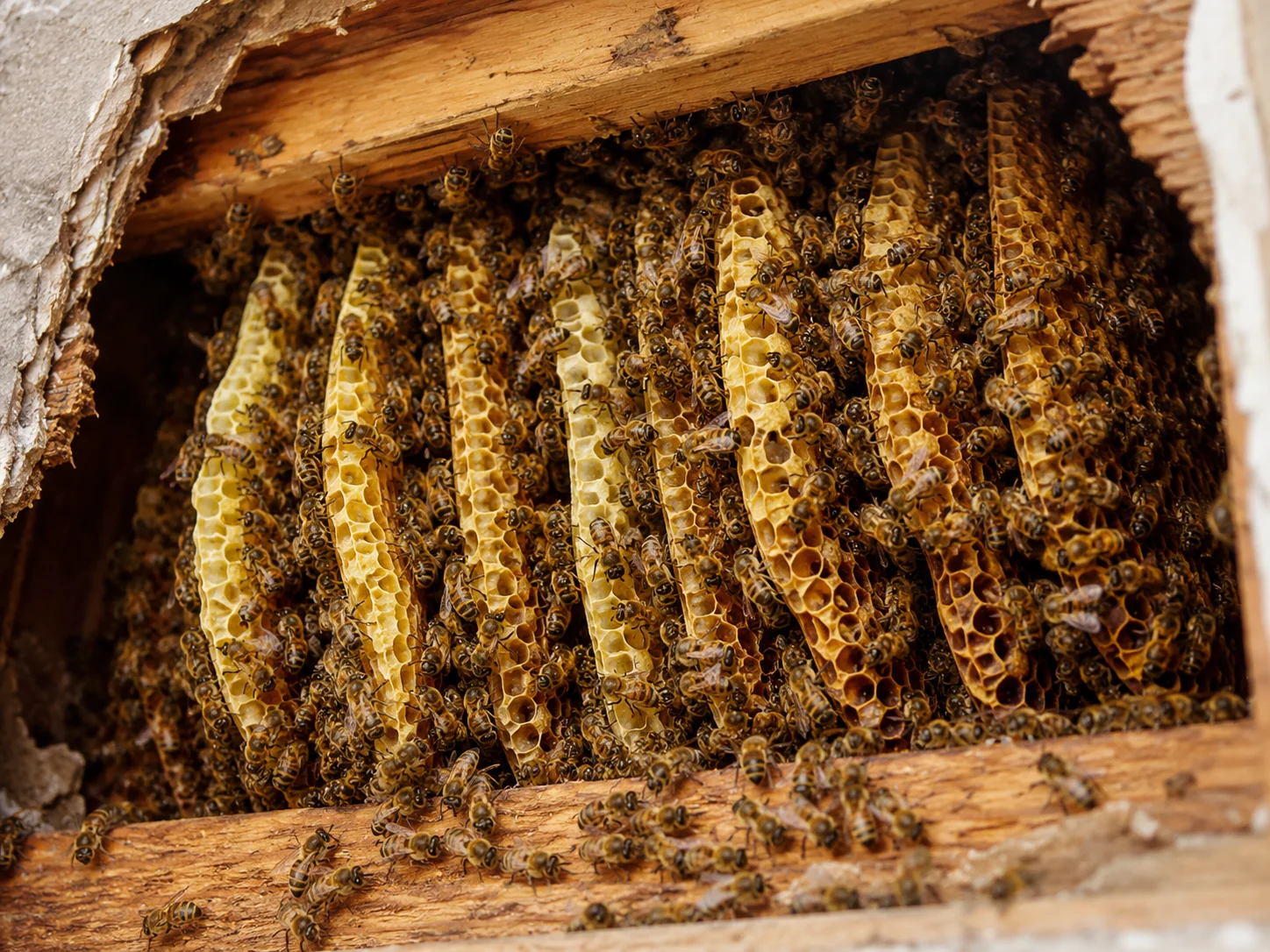
Honey bees nest in cavities chimneys, wall voids, roof spaces and build waxy honeycomb rather than papery pulp. A honey bee colony can number tens of thousands and may persist for years. If you see a dense mass of golden-brown bees and comb, this is a honey bee colony and should be handled by a beekeeper, not destroyed.
Bumblebee Nest
Bumblebees nest in small colonies (often just a few dozen to a couple of hundred) in the ground, in old rodent burrows, under sheds, in compost heaps or in loft insulation. They are docile, are excellent pollinators, and their nests naturally die out by late summer. Bumblebee nests almost never need intervention they are best left alone.
Why It Matters: Bees Are Protected
One-third of Ireland's 100 wild bee species are threatened with extinction. Bees pollinate crops and wildflowers worth hundreds of millions of euro to the Irish economy each year. The All-Ireland Pollinator Plan exists specifically to protect them. A responsible pest controller never destroys a bee colony that can be relocated and Central Pest Control does not.
This is the heart of why identification matters. Reaching for wasp spray at the first sight of a striped insect can mean killing a protected, declining pollinator. A professional pest controller identifies the species first and acts accordingly: treating wasps, but advising on relocation for bees. It is both the responsible and, in the case of honey bees, the ecologically important thing to do.
What to Do If You Have Bees
- 1Do not spray or disturb the colony - bees are protected pollinators and disturbing them helps no one.
- 2Identify the type - honey bees (large colony, comb) may be collected by a beekeeper; bumblebees (small, ground nest) are best left to die out naturally by autumn.
- 3Contact a beekeeper for honey bees - many local associations will collect or advise on a swarm or established colony free of charge.
- 4Call a professional for advice - if you are unsure, we will identify the species for you and point you to the right course of action, even if that means no treatment at all.
What to Do If You Have Wasps
Wasps are not protected and, near a home, can pose a real stinging risk particularly to anyone with an allergy. If you have confirmed wasps, professional same-day treatment is the safe, effective option. Do not attempt DIY removal of a nest in a roof or cavity. See our wasp nest removal Dublin page for same-day, fixed-price treatment, or our blog on getting rid of a wasp nest safely for the full DIY-versus-professional picture.
Frequently Asked Questions
-
How do I know if it's a wasp or a bee nest?
Look at both the insect and the nest. Wasps are glossy yellow-and-black with a narrow waist and build papery grey nests in roofs, cavities and hedges. Bees are hairier and rounder honey bees build waxy comb in cavities, bumblebees nest in the ground or under sheds. If you are unsure, a professional can identify the species before any action is taken. -
Are bees protected in Ireland?
Yes. Bees are vital, declining pollinators protected under conservation initiatives including the All-Ireland Pollinator Plan. Responsible pest controllers do not destroy bee colonies that can be relocated. Honey bee colonies should be collected by a beekeeper; bumblebee nests are best left to die out naturally by autumn. -
Will a pest control company remove bees?
A responsible firm will not destroy protected bees. Central Pest Control identifies the species first: we treat wasps, but for bees we advise on relocation and, for honey bees, point you to a local beekeeper. We only ever treat bees in the rare cases where there is a genuine, unavoidable safety risk and relocation is not possible. -
What happens if I spray a bees' nest by mistake?
Spraying a bees' nest can kill protected pollinators and is best avoided entirely. If you are not certain whether you have wasps or bees, do not spray call a professional to identify the species first. Correct identification protects both you and Ireland's declining bee population.
Not Sure Whether It Is Wasps or Bees?
Central Pest Control identifies the species first, treats wasps where needed, and advises on bee relocation where appropriate. Call us for responsible guidance before disturbing any nest.