Cockroaches in Commercial Kitchens: Why Early Professional Pest Control Matters
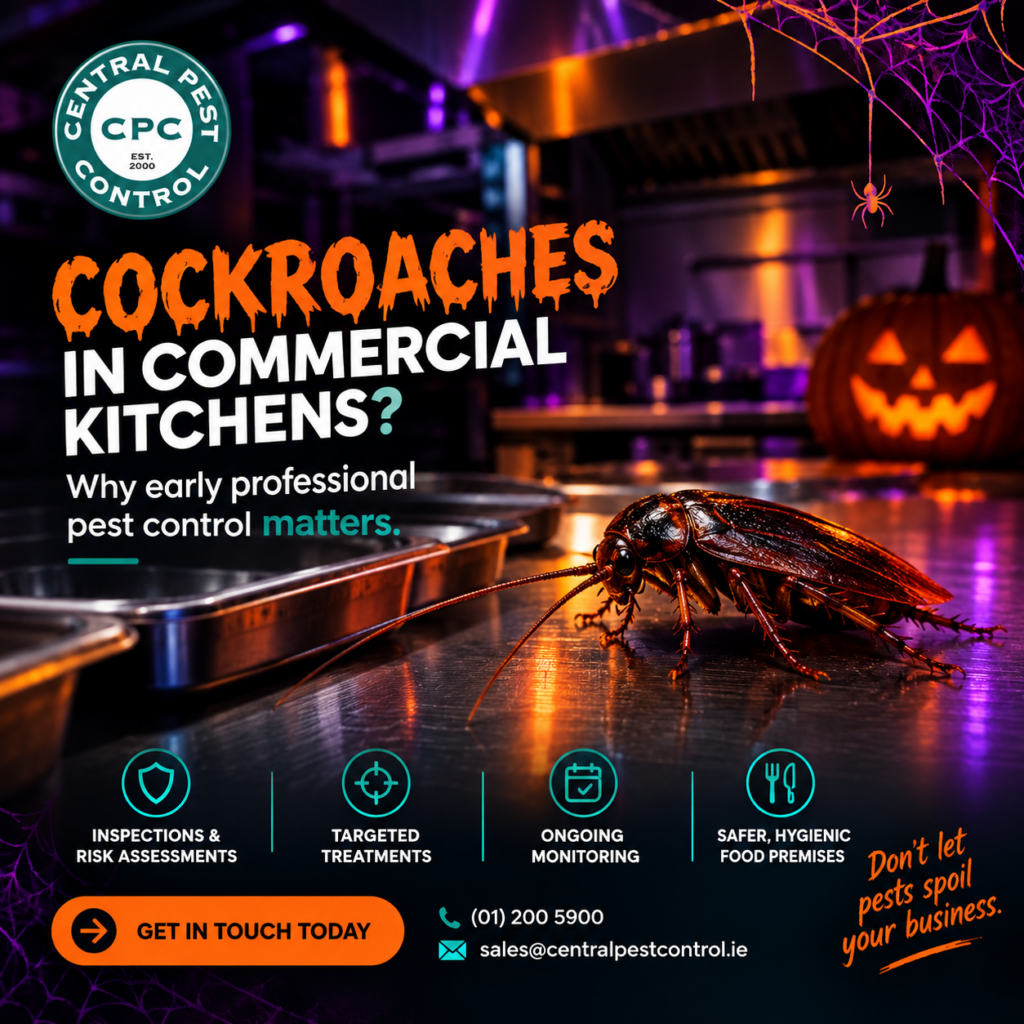
For restaurants, cafés, takeaways, hotels and other food businesses, cockroaches are more than an unpleasant sight. Their presence can create food contamination risks, undermine customer confidence and raise serious concerns about hygiene and pest management.
The difficulty is that cockroach activity often begins in areas that are rarely visible during normal kitchen operations. Behind refrigerators, beneath cooking equipment, around pipework and inside small structural gaps, these pests can find the warmth, moisture and shelter they need to survive.
By the time cockroaches are regularly being spotted in a kitchen, the underlying problem may be more established than it first appears.
At Central Pest Control, we provide professional pest management for commercial premises across Dublin and surrounding areas, helping businesses identify pest activity, implement appropriate treatments and reduce the risk of recurring infestations.
Why are cockroaches a concern in commercial kitchens?
Commercial kitchens can provide favourable conditions for cockroaches. Food preparation, deliveries, warm equipment, water sources and busy operating schedules can create opportunities for pests to enter and establish themselves.
Cockroaches can also be introduced through deliveries, packaging, equipment or movement between adjoining premises. An infestation is not necessarily evidence of poor cleaning, which is why a professional assessment is important.
Their presence can create several problems for a food business:
- Food contamination: Cockroaches can transfer microorganisms onto food, utensils and preparation surfaces.
- Hygiene concerns: Evidence of pest activity can raise questions about cleaning, storage and preventative controls.
- Business reputation: Customers expect food premises to maintain high standards of hygiene.
- Operational disruption: An infestation may require additional cleaning, corrective action and treatment.
- Food safety compliance: Pest activity must be addressed as part of an effective food safety management system.
Early intervention can help a business deal with the issue before it becomes more difficult to manage.
Where do cockroaches hide in commercial kitchens?
Cockroaches are skilled at hiding in small, sheltered spaces. They are often associated with warm and humid environments, making certain areas of commercial kitchens particularly important during an inspection.
Behind refrigerators and cooking equipment
The spaces behind fridges, freezers, ovens and other appliances can provide warmth and shelter. These areas may be difficult to inspect during routine cleaning, particularly where equipment is heavy or fixed in position.
Around pipes, drains and service openings
Gaps around plumbing, pipework and service penetrations can provide potential harbourage or routes between areas. Drains and damp locations may also warrant investigation, depending on the cockroach species and the conditions present.
Inside equipment and structural voids
Cockroaches can shelter in narrow gaps, cupboards, joints, wall voids and some electrical or mechanical equipment. Their ability to remain hidden can make the extent of an infestation difficult to judge from occasional sightings alone.
In storage and delivery areas
Cardboard packaging, incoming stock and cluttered storage areas can create additional hiding places. Deliveries should be checked, and storage practices should allow floors, corners and shelving to be inspected and cleaned effectively.
A professional inspection considers the wider premises rather than focusing only on the spot where a cockroach was seen.
What are the warning signs of cockroach activity?
Live cockroaches are the most obvious warning sign, but other evidence may be present before sightings become frequent.
Look out for:
- Small dark droppings around cupboards, appliances and sheltered gaps.
- Shed skins or egg cases in hidden locations.
- Unusual musty odours in areas with established activity.
- Cockroaches appearing repeatedly in the same location.
- Sightings around equipment, storage areas or during quieter periods.
These signs do not all confirm an infestation on their own. Correct identification and a thorough inspection help establish whether cockroaches are present, where they may be harbouring and what action is appropriate.
If you spot cockroaches during normal kitchen operations, do not assume that removing the visible insects has resolved the problem.
Why DIY cockroach treatments often fall short
Commercial kitchens present challenges that can make a general-purpose spray or a few traps insufficient.
Cockroaches may be sheltering in several locations, including areas that are inaccessible without moving equipment or carrying out a more detailed inspection. Treating only the visible area can leave other harbourage points unaffected.
Inappropriate pesticide use can also create unnecessary risks in food preparation environments, particularly where products are applied near exposed food, utensils or work surfaces.
A professional approach starts with identifying the pest and assessing the premises. Treatment methods should then be selected according to the infestation, the environment, the product label and the requirements of the business.
Effective control is not simply about killing the cockroach that has been spotted. It is about addressing the source of activity and checking whether the treatment has worked.
What does professional cockroach control involve?
Every commercial kitchen is different. The appropriate response depends on the species, the extent of activity, the layout of the premises and the risks associated with the business.
1. Inspection and risk assessment
A technician assesses the affected areas, searches for evidence of activity and identifies potential harbourage points and contributing conditions.
The inspection may include equipment surrounds, storage areas, pipework, accessible service voids and other locations relevant to the findings.
2. Targeted treatment
Treatment is selected according to the findings. Depending on the circumstances, professional methods may include targeted gel baits or other suitable products applied to appropriate locations.
The treatment plan must account for food safety, staff access, equipment and any necessary precautions. Products should always be used in accordance with their approved labels.
3. Monitoring and follow-up
Cockroach control may require monitoring and further visits, depending on the infestation and treatment used.
Follow-up checks help establish whether activity has reduced, whether additional action is required and whether contributing conditions have been addressed.
4. Practical prevention advice
Technicians can identify conditions that may encourage cockroach activity, including persistent moisture, gaps around services, difficult-to-clean spaces and storage practices that provide shelter.
Corrective action may involve improving cleaning access, repairing leaks, reducing clutter or sealing suitable gaps where appropriate.
5. Service records and recommendations
For commercial customers, clear documentation helps demonstrate what was inspected, what activity was found, which actions were taken and what further recommendations were made.
This information can support a business’s wider pest management and food safety procedures.
Cockroach control and food safety responsibilities
Food businesses in Ireland must manage food safety risks through appropriate procedures based on HACCP principles. Pest prevention and control form an important part of those arrangements.
Where cockroach activity is identified, the business should act promptly, assess the potential contamination risk, take appropriate corrective action and retain relevant records.
The response required will depend on the circumstances. Businesses should follow their food safety procedures and seek guidance from the appropriate authority where necessary.
Professional pest control can support these efforts through inspection, treatment, monitoring and documented recommendations. It does not replace the food business operator’s responsibility for food safety, cleaning, maintenance and effective day-to-day management.
For more information, see our related guide: Cockroaches in Irish Food Businesses: EHO Compliance Guide.
Why choose Central Pest Control?
Central Pest Control is a family-run, fully Irish-owned pest control company with more than 35 years of experience.
We work with commercial customers across Dublin and surrounding areas, providing professional pest management tailored to the premises and the problem identified.
Our commercial services can include:
- Inspections and pest risk assessments.
- Targeted cockroach treatments.
- Monitoring and follow-up where required.
- Practical recommendations to reduce the risk of recurrence.
- Service reporting and documentation for commercial customers.
- Ongoing pest management programmes tailored to the site.
We understand that businesses need a practical, professional response that takes account of their premises, operating hours and responsibilities.
Whether you manage a restaurant, takeaway, hotel, food production facility or another commercial property, our team can assess your requirements and recommend an appropriate course of action.
Need professional cockroach control for your commercial kitchen?
If you have spotted cockroaches or suspect activity in your premises, early investigation can help you understand the scale of the problem and what needs to happen next.
Contact Central Pest Control to discuss your requirements for professional commercial cockroach control in Dublin and surrounding areas.
Central Pest Control Ltd
Telephone: (01) 200 5900
Email: sales@centralpestcontrol.ie
Website: https://centralpestcontrol.ie/
Protect your premises, support your food safety procedures and deal with cockroach activity before it becomes a bigger concern.
Frequently asked questions
Can cockroaches infest a clean commercial kitchen?
Yes. Cockroaches can enter through deliveries, packaging, equipment or adjoining premises. Good cleaning and storage practices reduce the opportunities available to pests, but they cannot guarantee that cockroaches will never enter.
Should a restaurant close if it finds a cockroach?
The appropriate response depends on the circumstances, including the location of the sighting and any contamination risk. The business should follow its food safety procedures, assess the affected area and take immediate corrective action. Where necessary, seek advice from the relevant authority.
How quickly can professional cockroach control work?
This depends on the species, the extent of the infestation, the treatment selected and the conditions within the premises. Some situations require follow-up treatment and monitoring rather than a single visit.
How can a commercial kitchen reduce the risk of cockroaches returning?
Maintain effective cleaning routines, manage waste, address leaks, inspect incoming deliveries, reduce clutter and make hidden areas accessible for inspection. Professional monitoring and prompt action when activity is detected can provide additional protection.
Does Central Pest Control provide commercial cockroach control in Dublin?
Yes. Central Pest Control provides professional pest management for commercial premises across Dublin and surrounding areas. Contact the team on (01) 200 5900 or email sales@centralpestcontrol.ie to discuss your requirements.