Rodents: More Than Just a Nuisance – The Hidden Risks to Your Property and Business
As temperatures begin to drop and the colder months approach, rats and mice increasingly seek shelter, warmth and reliable food sources. Unfortunately, commercial premises, warehouses, restaurants, offices and residential properties can all provide the conditions rodents need to survive.
However, a rodent infestation is about much more than an occasional sighting or an unpleasant nuisance.
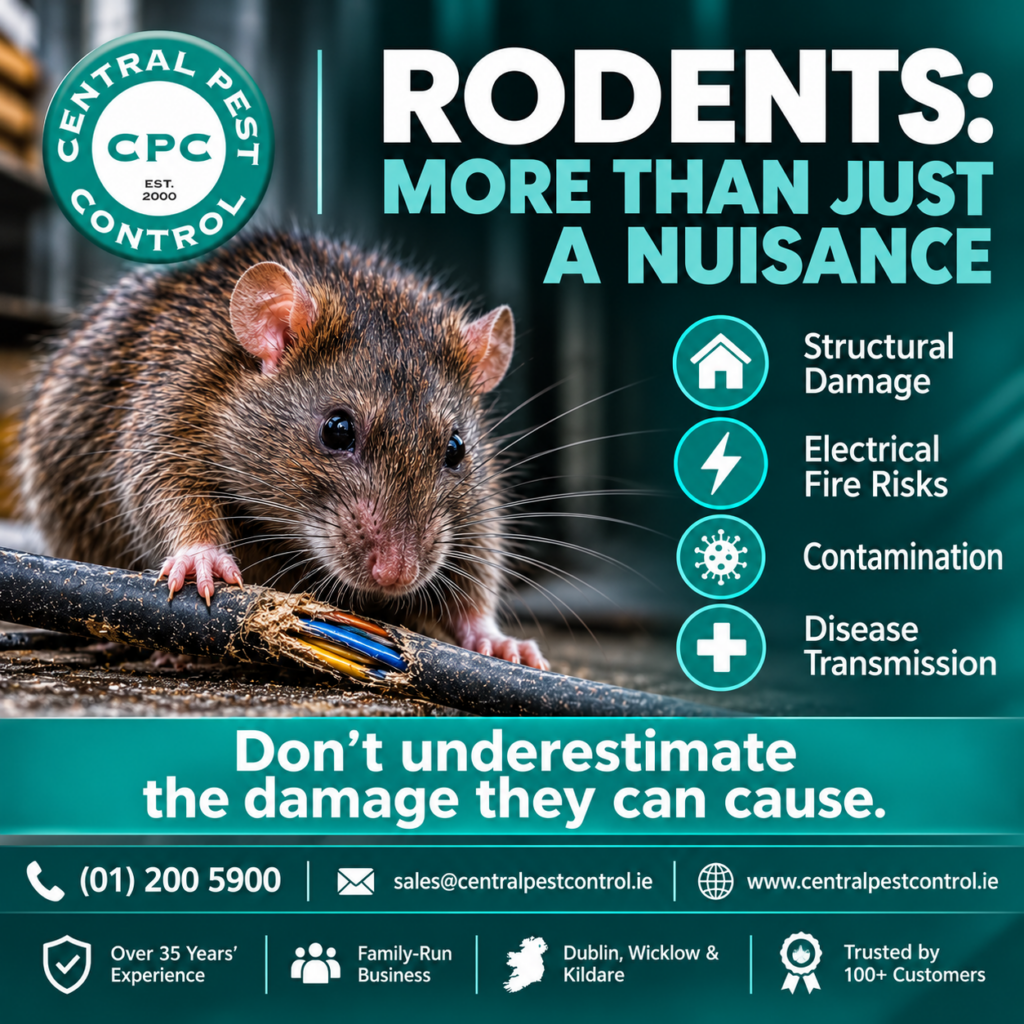
Rats and mice can cause significant structural damage, contaminate working environments, damage stock and materials, and create potential electrical and fire hazards through their constant gnawing behaviour.
For businesses in particular, an unmanaged rodent problem can quickly become an expensive and disruptive issue.
At Central Pest Control, we believe effective rodent management starts with recognising the risks early and putting professional preventative measures in place.
1. Structural Damage: What Rats and Mice Can Destroy
Rodents have continuously growing incisor teeth, meaning they need to gnaw regularly to keep them worn down.
Unfortunately, this behaviour can cause considerable damage to buildings and their contents.
Common examples include:
- Damage to insulation, plasterboard and internal wall structures.
- Gnawing through packaging and stored materials.
- Damage to pipes, seals and other building components.
- Destruction of food stock and commercial goods.
- Damage to doors, storage areas and potential entry points.
In warehouses and industrial facilities, even relatively minor rodent activity can result in damaged stock, compromised packaging and additional cleaning or replacement costs.
For businesses storing food, raw materials or valuable products, the financial consequences can be particularly significant.
2. Electrical Damage and Potential Fire Hazards
One of the more serious risks associated with rodent activity is damage to electrical wiring.
Rats and mice can gnaw through cable insulation, potentially exposing electrical conductors and creating dangerous conditions.
Damaged wiring can contribute to electrical faults, equipment failures and, in certain circumstances, fire hazards.
This is particularly concerning in commercial premises where electrical systems, machinery, refrigeration equipment and computer infrastructure are essential to daily operations.
Rodent activity around electrical installations should never be ignored. Any suspected electrical damage should be assessed by a qualified electrician, alongside professional pest control measures to address the underlying infestation.
3. Contamination and Food Safety Risks
Rodents can contaminate their surroundings through urine, droppings, hair and other biological material.
In food preparation, storage and production environments, this presents a particularly serious concern.
Potential contamination areas include:
- Food preparation surfaces.
- Dry goods and food storage facilities.
- Packaging and food production equipment.
- Stockrooms and delivery areas.
- Waste storage and disposal areas.
For restaurants, hotels, food manufacturers and other food-related businesses, rodent activity can undermine hygiene standards and create serious food safety concerns.
Businesses must maintain appropriate pest prevention and monitoring procedures as part of their wider food safety management systems.
Effective pest management is not simply about responding when a rat or mouse is spotted. It is about identifying risks, monitoring activity and reducing the likelihood of future infestations.
4. Disease Transmission and Public Health
Rodents are associated with a number of diseases and can pose public health risks.
They may carry harmful bacteria and pathogens, potentially spreading contamination through their droppings, urine, saliva and contaminated surfaces.
One recognised example is Leptospirosis, which can be associated with exposure to infected animal urine, including that of rats.
The risk varies depending on the environment, the level of infestation and the nature of exposure. Nevertheless, appropriate hygiene, sanitation and professional pest management are important in reducing potential risks.
For commercial operators, protecting employees, customers and visitors means taking rodent activity seriously and responding promptly.
5. Why Businesses Should Not Wait for an Infestation to Become Obvious
A common mistake is to assume that rodent activity only becomes a problem when rats or mice are regularly seen.
In reality, rodents are often most active out of sight.
Signs of activity may include:
- Droppings around storage areas or along walls.
- Gnaw marks on packaging, cables or building materials.
- Scratching or movement sounds within ceilings and wall cavities.
- Nesting materials in concealed spaces.
- Grease marks or rub marks along established routes.
- Damaged food packaging or unexplained stock losses.
Identifying these signs early can help businesses address problems before they develop into more extensive infestations.
Regular inspections and monitoring are particularly valuable for premises with large storage areas, multiple access points or ongoing deliveries.
6. Why Professional Rodent Control Matters
Effective rodent control requires more than simply placing a few traps or bait stations around a property.
A professional approach should consider the entire environment, including the conditions attracting rodents and the routes they may be using to access the premises.
At Central Pest Control, our approach to rodent management considers several important areas:
Inspection and identification
Understanding the extent of activity, identifying potential harbourage areas and locating possible entry points.
Professional monitoring
Using appropriate monitoring and control measures to assess activity and identify developing problems.
Bait station management
Where appropriate, professionally selected and secured bait stations can form part of an integrated rodent management programme.
Proofing and prevention
Identifying access points and recommending practical improvements to reduce the opportunity for rodents to enter buildings.
Ongoing monitoring
For commercial premises, scheduled inspections and monitoring can help identify changes in activity and support long-term pest prevention.
Every property is different, which is why an effective rodent management programme should be based on the individual site, its risks and its requirements.
7. Why November Is an Important Time to Review Rodent Prevention
As autumn progresses into winter, buildings can become increasingly attractive to rodents seeking shelter from colder and wetter conditions.
Commercial premises often provide convenient access to warmth, food, water and undisturbed nesting areas.
Warehouses, restaurants, offices, food production facilities and commercial properties should pay particular attention to:
- External doors and loading bays.
- Gaps around service pipes and utility entry points.
- Waste storage and refuse areas.
- Roof spaces and concealed building voids.
- Food storage and preparation areas.
- External vegetation and potential harbourage areas.
Taking preventative action before activity increases can help reduce the likelihood of a more serious infestation developing during the winter months.
Professional Rodent Control Across Dublin, Wicklow and Kildare
Rodent infestations can affect businesses of every size, from independent restaurants and retail premises to warehouses, offices and larger commercial facilities.
At Central Pest Control, we are a fully Irish-owned, family-run pest control company with over 35 years of experience.
We provide professional pest management services across Dublin, Wicklow and Kildare, helping commercial and residential customers identify, manage and prevent pest problems.
Whether you are dealing with an active rat infestation, signs of mice within your premises or looking to improve your existing pest prevention arrangements, our team can help.
Don’t wait until rodent activity results in damaged stock, contaminated areas or costly disruption.
Contact Central Pest Control today to discuss professional rodent control and preventative pest management.
Central Pest Control Ltd
Telephone: (01) 200 5900
Email: sales@centralpestcontrol.ie
Website: www.centralpestcontrol.ie
Professional pest control. Trusted local experience.